


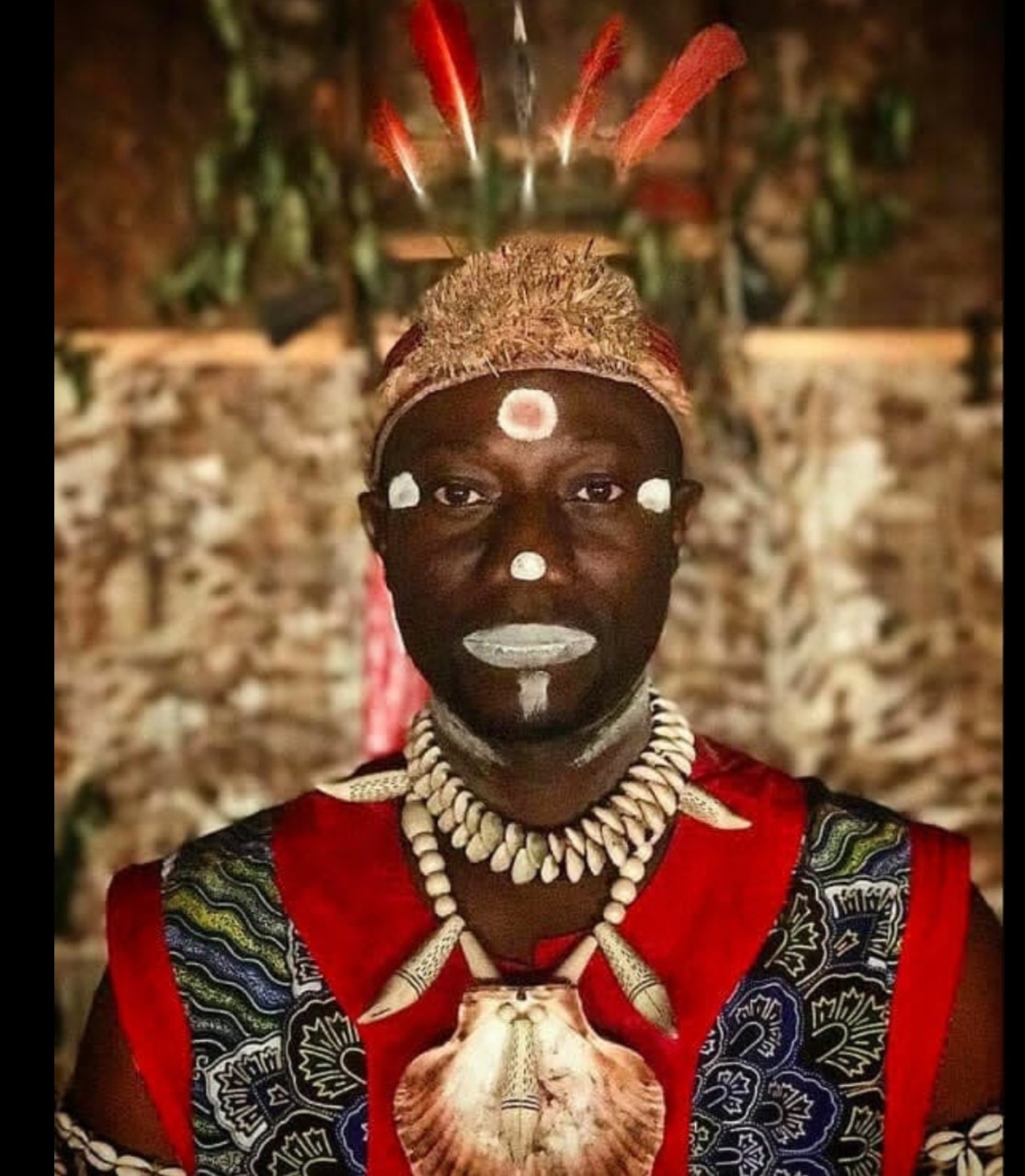
What Is the Bwiti Tradition? Understanding Missoko Bwiti From the Source
Most of what is written about the Bwiti tradition in Western sources is incomplete, distorted, or simply wrong. This is not surprising. The Bwiti is an oral tradition that has been transmitted within the forest communities of Gabon for thousands of years. It was never designed to be described from the outside; it was designed to be lived from the inside.
This article is an attempt to offer an accurate introduction to the Bwiti tradition, specifically the Missoko Bwiti lineage of Moughenda Mikala. It is not comprehensive, and it is not a substitute for direct experience. But it is honest.
What Bwiti Is
Bwiti is a spiritual and healing tradition rooted in the forest cultures of Gabon and Cameroon in Central West Africa. It is not a religion in the Western sense. It is not shamanism in the generalized New Age sense. It is not psychedelic therapy in the clinical sense. The best single-word translation is probably tradition: a way of life, a set of practices, a body of knowledge, and a community of people who have organized their existence around the pursuit of truth.
The central question of Bwiti is: Who are you, really? Not the person your family told you to be. Not the persona you constructed to survive. Not the collection of wounds and defenses you have accumulated. Who are you when all of that is stripped away? Iboga is the primary tool used to answer that question.
Core Elements of Bwiti Practice
Music and Rhythm
Music is not background in Bwiti ceremony, it is a primary healing technology. The ngombi (mouth harp) and mogongo (traditional harp) produce specific rhythmic patterns that interact with the iboga experience, guiding the participant through different phases of the journey.
These rhythms were not composed by human creativity. In our understanding, they were received from the spirit of iboga and have been preserved through oral transmission across generations. Different rhythms serve different purposes: some open, some protect, some guide deeper, some help with integration.
The shaman reads the participant’s state and adjusts the music accordingly, a real-time, responsive healing interaction that no recorded playlist can replicate.
Fire and Light
Ceremony is held at night, with fire as the central light source. This is not atmospheric decoration. Darkness and firelight create specific perceptual conditions that support the iboga experience. The dancing shadows, the warmth, the living quality of firelight, all contribute to an environment that facilitates the inner journey.
The Role of the Shaman
In the Bwiti tradition, the shaman (nima or nganga) is not a passive observer. The shaman actively participates in the ceremony, working with the energetic and spiritual dimensions of the participant’s experience. Through training, initiation, and years of practice, the shaman develops the ability to perceive what the participant is moving through and to provide guidance, protection, and support.
This is fundamentally different from the “facilitator” model used in many Western retreat settings, where the staff monitors physical safety but does not engage with the spiritual dimension of the experience. A trained Bwiti shaman operates on multiple levels simultaneously, physical, emotional, psychological, and spiritual.
Community
Bwiti is inherently communal. Even when an individual undergoes a personal healing ceremony, they do so within the context of a community that holds space, witnesses, and supports the process. This communal dimension is therapeutically important, healing in isolation is qualitatively different from healing witnessed and supported by others.
In our village in Gabon, ceremony is not something that happens to one person while others watch. The community participates through music, dance, presence, and prayer. The individual’s healing becomes part of the community’s collective process.
Initiation: The Heart of Bwiti
The initiation ceremony is the most significant experience within the Bwiti tradition. It is a rite of passage — a deliberate, guided process of dying to the old self and being reborn into a deeper understanding of who you truly are.
A full Bwiti initiation at Bwiti House spans 14 days and involves multiple iboga ceremonies of increasing depth, interspersed with teachings, integration, and preparation. The process is carefully structured and guided by experienced shamans at every stage.
Initiation is not for everyone, and we never pressure anyone toward it. But for those who are called to this depth of work, it represents one of the most profound transformational experiences available to a human being. Since 1990, we have initiated over 10,000 people from more than 150 countries, and we have witnessed, again and again, the extraordinary capacity of this tradition to catalyze genuine, lasting change.
Bwiti in the Modern World
As iboga gains global attention, the question of how to honor traditional Bwiti wisdom while making it accessible to people from different cultural backgrounds becomes increasingly important.
At Bwiti House, we have been navigating this question for 35 years. Our approach is straightforward: we do not water down the tradition. International participants receive the same ceremonies, the same teachings, and the same depth of engagement as someone from our village. We adapt the language and some logistical elements to accommodate different backgrounds, but the core practice remains unchanged.
This is important because the Bwiti ceremonial framework is not optional packaging around the medicine. It is an integral part of how the medicine works. The music, the rituals, the guidance of the shaman, the communal setting, these elements actively shape the quality and depth of the healing experience. Remove them, and you are left with a chemical event rather than a transformational journey.
We have also invested heavily in training providers who carry this tradition into other parts of the world with integrity. Over 50 providers trained at Bwiti House now operate centers across North America, Europe, Australia, and beyond. Each of them has undergone extensive training in our village, received initiation, and been authorized to carry the tradition forward.
Misconceptions About Bwiti
**”Bwiti is a religion.”** Bwiti has no central authority, no required beliefs, no holy book. It is a spiritual practice rooted in direct experience. People of any religious background, or none, can work within the Bwiti framework without conflict.
**”You need to be African to practice Bwiti.”** Bwiti has always welcomed seekers from any background. The spirit of iboga does not discriminate by ethnicity, nationality, or culture. What matters is sincerity, respect, and willingness to engage honestly with the process.
**”Bwiti ceremonies are dangerous.”** When conducted by experienced practitioners with proper medical screening, Bwiti ceremonies have an excellent safety record. Our center (Bwiti House) has maintained a 35-year track record of guest safety. The tradition itself includes sophisticated methods for managing the intensity of the experience and ensuring participants’ wellbeing.
**”Any iboga ceremony is a Bwiti ceremony.”** This is perhaps the most damaging misconception. Many centers around the world offer iboga in settings that have nothing to do with the Bwiti tradition, sometimes using the word “Bwiti” for marketing purposes while lacking any genuine connection to the tradition. Without proper training, initiation, and authorization from the tradition, these are iboga experiences but they are not Bwiti ceremonies.
Mikala, M. (n.d.). What is the Bwiti tradition? A guide. Bwiti House. https://www.bwitihouse.com/blog/what-is-bwiti-tradition